Search over 27,600 MOOC courses
enter subject, university name or course name
Career Evolve is your partner in online learning and career development. Search our catalog of 28,000+ courses from over 21,000 top colleges and universities. Our partners have helped over 2 million students and continue to enroll over 30,000 students each month. Career Evolve provides you with access to free and affordable online training.

You can take courses in subjects varying from Philosophy to Computer Science or even Advanced Fiction Writing to Becoming a Physical Therapy Aide. Learn at your pace anytime and anywhere.
Career Evolve also integrates with LinkedIn to profile your achievements to potential employers.

Whether you are searching for micro learning from providers, such as Coursera, EdX or courses from leading Universities like MIT, Stanford and Peking University, Career Evolve is the answer for affordable learning and shrinking training budgets.

Invest in yourself with Career Evolve.

Discover your next learning opportunity from just one of our many Universities


Massachusetts Institute of Technology Georgetown University University of Queensland Boston University McGill University
Harvard University UC Berkeley Cornell University University of British Columbia Hong Kong University of Science and Technology
Showing posts with label Khan Academy. Show all posts

Friday, 20 May 2016

Unacademy raises $500,000 led by Blume Ventures, to launch mobile apps soon

Online learning platform, Unacademy on Thursday announced that it had raised a $500,000 seed round of funding led by Blume Ventures. Google India Head Rajan Anandan, CommonFloor Co-founder Sumit Jain, Taxi4Sure Co-founder Aprameya Radhakrishna, former Flipkart senior executive Sujeet Kumar, redBus Co-founder Phanindra Sama are some of the angel investors who participated in this round.
The funds will be deployed towards product development and scaling for thousands of educators.

Story so far

Unacademy was started as an educational YouTube channel by Gaurav Munjal, Roman Saini, Hemesh Singh and Sachin Gupta. In January 2016 they launched their free learning platform Unacademy.in.
Gaurav and Hemesh were previously running Flatchat which was acquired by CommonFloor in 2014. Roman, 24, is a doctor from AIIMS and one of the youngest persons to crack the Civil Services Examination. To follow his passion for building Unacademy, he quit the administrative services when he was Assistant Collector of Jabalpur.


While the YouTube channel has more than 15 million video views and is among the top educational channels in the country, the platform has more than 1,500 lessons ranging from learning a new language to cracking government examinations.
Unacademy allows educators to create courses on the platform. But all educators go through an interview process and selection is based on their experience. The startup helps educators create these courses that are then available on the platform for free. Unacademy aims to make teaching cool and adds that some people who never thought they would be teaching have created courses on the platform and are loving the response. Recently Kiran Bedi taught a course on Time Management and Productivity.
Talking about Unacademy’s vision to distribute knowledge of educators and innovators in the form of mini courses, Karthik Reddy, Managing Partner of Blume Ventures noted,
Whether its the brightest kid in class summarising course material for his fellow classmates or someone getting tips for a civil services exam or a first-time traveller to the US getting life tips, these were non-scalable in the past. By fluidly weaving them into the content format that Unacademy has, teaching and learning can be truly democratic – at an unprecedented scale. Delivery of education in India needs radical shifts and Unacademy is a bet to deliver that objective.
Talking to YourStory, Gaurav added that they have about 100 educators on board currently and plan to scale up and go from 1,500 lessons to at least 4,000 lessons by the end of 2016. As part of their product development strategy and to reach out to more people, Unacademy will also launch Android and iOS mobile apps in the coming few weeks. Gaurav added,
The mobile apps will include some advanced features and users will be able to save vidoes offline to view later. We are also launching ‘Unacademy create’ which will be a mobile app for educators to create and manage their content.
Unacademy also has plans in the pipeline to include multiple choice tests to help users test what they just learnt and complete the ‘learning loop’. Coming to revenue model, Gaurav added that they are currently looking to grow the platform and revenue isn’t the main focus. But they are experimenting with a ‘guru dakshina’ model where learners can pay any amount they wish to.

Sector overview

Research and Markets estimates that the MOOC sector is estimated to grow from $1.83 billion in 2015 to $8.50 billion by 2020, at an estimated compound annual growth rate (CAGR) of 36%. Asia-Pacific (APAC) expected to be grow at the highest CAGR for MOOC platform.
The rising cost of education and the inability of colleges and universities worldwide to meet the global demand as well as factors like adoption of device-based computing, increased global internet connectivity, and personalisation of technology are the driving forces of Massive Open Online Course (MOOC) market.
Coursera, edX, Udacity are popular global players in this space. In December 2015, Khan Academy had partnered with Tata Trusts to create specialised, freely available online content tailor-made for India. The education sector is slowly coming of age in India and getting more organised through new age players. In March 2016, Adaptive learning platform Byju’s had raised $75 million from Sequoia Capital and Sofina in the largest fund raise by an edtech startup in India. With the number of Internet users in India estimated to reach 500 million by 2017, edtech and MOOC platforms have tremendous room for growth.
Website- Unacademy

Wednesday, 29 July 2015

Technology and Its Possibilities Are the Future

Technology and Its Possibilities Are the Future

Madelyne Xiao
Madelyne Xiao, a student at Stanford University, is press director for she++, which aims to create community and momentum for female technologists and computer scientists.
Updated July 22, 2015, 11:09 AM
I'm not alone among my peers at Stanford University in seeing technology as the future. Indeed, for many of us, technology is the path toward change, and the Internet has democratized opportunities and communication.  Not all effects are good, but technology's capacity for positive change is undeniable.
We’re acutely aware of the ways in which the Internet can magnify cruel behavior, like cyberbullying. But the social flip side can be just as powerful. Take Brandon Stanton, the street photographer behind Humans of New York. He harnesses social media to share the stories of strangers he meets and interviews.

Far from settling with one-click Internet approval in the form of "Likes" — which he gets in spades — followers of Stanton's Facebook page recently raised over a million dollars to establish a scholarship fund for graduates of the Mott Hall Bridges Academy in Brooklyn, which will also let them visit Harvard University on class trips, and it all started with a photograph of a student who cited his principal as his role model.

Or take a look at Khan Academy, coursera, Udacity and other providers of online courses. They provide free learning materials to their users, and an international network of namebrand universities and instructors to reach a classroom of millions.

Sure, not all effects of technology are positive — some social-impact goals on mission statements are dubious, to say the least, and the lack of diversity undercuts the industry — but technology’s capacity for positive change is undeniable. The building of life-changing inventions — like 3-D printed prosthetic limbs — show that the industry has the potential to continue to grow in beneficial ways, and we’d like to see this potential come to fruition.

Saturday, 25 July 2015

Five Ways Your Kids Can Acquire Coding Superpowers Over The Holidays

Tech+-2
Photo Credit: Simon Laroche_8 via Compfight cc

Coding is one of the most important skills to have in the world right now, as it is the language that drives the digital universe. In the next twenty years, even jobs without a direct link to computing sciences, will require employees with a basic understanding of computing and coding.
Thanks to the internet and the awareness of the need to code, it is now easier and accessible to learn how to code. There are numerous ways your kids can be gainfully occupied over the summer holidays.

1. Buy them a personal computer

personal computer

Photo Credit: oddmenout via Compfight cc

Although this might come across as pretty obvious, it is worth saying. Children need the opportunity to learn basic computer skills. And no, don’t share your own computer with them,buy them THEIR own PC. It’s called “personal computer” for a reason”. If you are are worried about the dangers awaiting your children on the internet, as you should rightfully be, there are several ways to ensure your children’s safety online.

2. Buy them a Raspberry Pi

rapsberry pi
Photo Credit: vrypan via Compfight cc

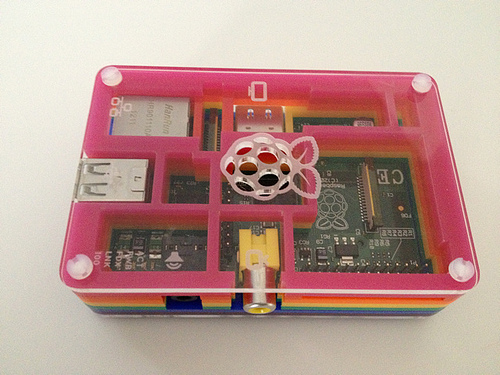
For good measure, you should consider throwing in a Raspberry Pi kit. Raspberry Pis are credit card-sized computers that can be used to make really cool stuff, and learn programming languages like Scratch and Python.

What really makes them great is that not only are they cheap, they are designed to be intentionally easy to programme so that kids can learn and build cool things with them. Raspberry Pis are available for sale in Nigeria.

3. Enroll them in a summer coding programme

summer-of-code-banner-white

Increasingly, there are many initiatives in Nigeria that are teaching children to code. CcHUB Nigeria is organising a four week summer programme in Lagos as part of their initiatives to raise a new generation of digital makers. Tech Quest also has a summer camp programme in several major cities in Nigeria this year.

Not all of these are free, as you will see, but even where you have to pay, it will be money well spent.

4. Invest in games

kids gaming
Photo Credit: Clearwater Public Library System Photos via Compfight cc

Games are an awesome way to engage kids in learning a new skill largely because using games as a learning aid is fun and doesn’t feel like a chore.

For younger children, Lightbot, Code Monkey Island, Robozzle, Robot Turtles, and Kodable are good options to introduce them to the world of  programming.

SpaceChem, CodeCombat, Codemancer and Machineers provide gaming experiences that are more suited to older children and teenagers. Like we say in Nigeria, “not everytime” Soccer or Car Racing…

5. Online Learning Resources

code.org
One can learn virtually everything on the internet, including coding, obviously. There are several online learning resources with varying levels of learning involvement and complexity.

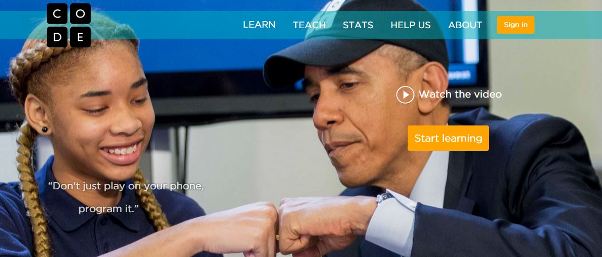
Code.org is uniquely suited to kids because it was actually created to get coding into the mainstream student curriculum. The site provides basic programming lessons and also offers a gamified approach, as it can be linked with gaming applications and other online resources such as Tynker, Scratch and Khan Academy.

If your child is already a programming whiz or prefers a more traditional learning experience, Coursera and Codecademy offer more advanced, structured and formal approaches to learning programming languages.

This post was brought to you in partnership with Tech+. Want to learn more about how technology can improve your lifestyle? Register to attend the Tech+ conference and exhibition.
Find Enroll Learnbanner

Featured

Starting a Consulting 

Practice

Starting a Consulting Practice

Find out how you can earn income by sharing your training or knowledge with others.
PMP ® Certification Prep 1

PMP ® Certification Prep 1

Begin a well-paying career as a project manager by preparing to take--and pass--the PMP® certification exam.
How to Get Started in Game Development

How to Get Started in Game Development

Take steps toward a new career in game development by building a foundation to design games in a wide variety of genres for different audiences and platforms.
Accounting Fundamentals

Accounting Fundamentals

Gain a marketable new skill by learning the basics of double-entry bookkeeping, financial reporting, and more.
Conversational Japanese

Conversational Japanese

Whether you want to learn conversational Japanese for travel or just for fun, you'll find this course makes it easy and enjoyable for beginners to master the essentials of the Japanese language.
Introduction to QuickBooks 2015

Introduction to QuickBooks 2015

Learn how to quickly and efficiently gain control over the financial aspects of your business using this powerful software program.

Student Profiles