Search over 27,600 MOOC courses
enter subject, university name or course name
Career Evolve is your partner in online learning and career development. Search our catalog of 28,000+ courses from over 21,000 top colleges and universities. Our partners have helped over 2 million students and continue to enroll over 30,000 students each month. Career Evolve provides you with access to free and affordable online training.

You can take courses in subjects varying from Philosophy to Computer Science or even Advanced Fiction Writing to Becoming a Physical Therapy Aide. Learn at your pace anytime and anywhere.
Career Evolve also integrates with LinkedIn to profile your achievements to potential employers.

Whether you are searching for micro learning from providers, such as Coursera, EdX or courses from leading Universities like MIT, Stanford and Peking University, Career Evolve is the answer for affordable learning and shrinking training budgets.

Invest in yourself with Career Evolve.

Discover your next learning opportunity from just one of our many Universities


Massachusetts Institute of Technology Georgetown University University of Queensland Boston University McGill University
Harvard University UC Berkeley Cornell University University of British Columbia Hong Kong University of Science and Technology
Showing posts with label courser. Show all posts

Tuesday, 4 August 2015

Emerging Trends in MOOC Delivery of Business Education

 "There is a sea change in both the quantity and types of institutions offering MOOCs in the business education space", says Colin Nelson in this post on the AACSB Data and Research blog. Highlights include:

  • The majority of MOOCs are still run by universities or other tertiary-level educational institutions, but a growing number of business-related MOOCs are being offered by institutions for whom academics are a less central focus. Evidence for this trend exists even at the most established MOOC platforms. For example, some of the business-related MOOCs available on the edX platform are delivered by the Association of Chartered Certified Accountants (ACCA), the Inter-American Development Bank (IDB), or the International Monetary Fund (IMF), while Coursera hosts a MOOC delivered by economists from the World Bank Group.
  • More and more of the business-related MOOCs are being taught by faculty from outside the business school, or by professionals such as accountants or economists, either in tandem with business school faculty or on their own.
  • Colin Nelson also points to the increasing appearance of MOOC series that can be pursued for relatively low-cost credentialing options. EdX, for example, offers XSeries Certificates for completing a series of three to five related MOOCs, such as the Supply Chain Management XSeries of the Massachusetts Institute of Technology (MIT). Coursera likewise offers Specialization Certificates for completing short sequences of four to nine related MOOCs, usually including a capstone project, such as the Business Foundations Specialization of the Wharton School. The University of Illinois at Urbana-Champaign is now taking this evolution one step further, announcing the iMBA program, which will allow students to compile multiple Coursera Specialization Certificates into a full MBA degree, presumably at a fraction of the typical cost.
  • GF survivalBSNewer platforms have begun to expand various free or low-cost MOOC offerings available in the management education space, such as Silicon Valley’s NovoEd, India-based EduKart, France Université Numérique (FUN), and Chinese-language platforms ewant and xuetangX.
  • Some business schools are experimenting with independent offerings as well. Stanford Graduate School of Business offers many individual business MOOCs and full certificate programs, other than the ones it runs through Coursera and NovoEd, on iTunesU and on its own proprietary platform (Stanford OpenEdX). Harvard Business School also runs its HBX program independently of the edX platform that Harvard University co-founded with MIT.
For the detailed charts and links to all examples mentioned, please do check Colin Nelson’s blog post.

You may also be interested in Survival of the fittest: The new world order in education: Article from the latest EFMD Global Focus magazine. The education market has never been more buoyant. But that also means more change and new challenges to traditional business schools. If they do not respond, says Richard Taylor, they may face extinction.

Wednesday, 29 July 2015

Technology and Its Possibilities Are the Future

Technology and Its Possibilities Are the Future

Madelyne Xiao
Madelyne Xiao, a student at Stanford University, is press director for she++, which aims to create community and momentum for female technologists and computer scientists.
Updated July 22, 2015, 11:09 AM
I'm not alone among my peers at Stanford University in seeing technology as the future. Indeed, for many of us, technology is the path toward change, and the Internet has democratized opportunities and communication.  Not all effects are good, but technology's capacity for positive change is undeniable.
We’re acutely aware of the ways in which the Internet can magnify cruel behavior, like cyberbullying. But the social flip side can be just as powerful. Take Brandon Stanton, the street photographer behind Humans of New York. He harnesses social media to share the stories of strangers he meets and interviews.

Far from settling with one-click Internet approval in the form of "Likes" — which he gets in spades — followers of Stanton's Facebook page recently raised over a million dollars to establish a scholarship fund for graduates of the Mott Hall Bridges Academy in Brooklyn, which will also let them visit Harvard University on class trips, and it all started with a photograph of a student who cited his principal as his role model.

Or take a look at Khan Academy, coursera, Udacity and other providers of online courses. They provide free learning materials to their users, and an international network of namebrand universities and instructors to reach a classroom of millions.

Sure, not all effects of technology are positive — some social-impact goals on mission statements are dubious, to say the least, and the lack of diversity undercuts the industry — but technology’s capacity for positive change is undeniable. The building of life-changing inventions — like 3-D printed prosthetic limbs — show that the industry has the potential to continue to grow in beneficial ways, and we’d like to see this potential come to fruition.

Saturday, 25 July 2015

Five Ways Your Kids Can Acquire Coding Superpowers Over The Holidays

Tech+-2
Photo Credit: Simon Laroche_8 via Compfight cc

Coding is one of the most important skills to have in the world right now, as it is the language that drives the digital universe. In the next twenty years, even jobs without a direct link to computing sciences, will require employees with a basic understanding of computing and coding.
Thanks to the internet and the awareness of the need to code, it is now easier and accessible to learn how to code. There are numerous ways your kids can be gainfully occupied over the summer holidays.

1. Buy them a personal computer

personal computer

Photo Credit: oddmenout via Compfight cc

Although this might come across as pretty obvious, it is worth saying. Children need the opportunity to learn basic computer skills. And no, don’t share your own computer with them,buy them THEIR own PC. It’s called “personal computer” for a reason”. If you are are worried about the dangers awaiting your children on the internet, as you should rightfully be, there are several ways to ensure your children’s safety online.

2. Buy them a Raspberry Pi

rapsberry pi
Photo Credit: vrypan via Compfight cc

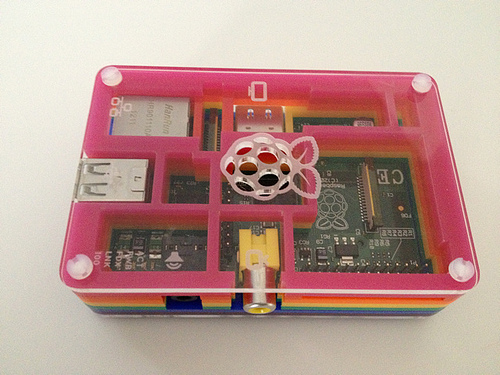
For good measure, you should consider throwing in a Raspberry Pi kit. Raspberry Pis are credit card-sized computers that can be used to make really cool stuff, and learn programming languages like Scratch and Python.

What really makes them great is that not only are they cheap, they are designed to be intentionally easy to programme so that kids can learn and build cool things with them. Raspberry Pis are available for sale in Nigeria.

3. Enroll them in a summer coding programme

summer-of-code-banner-white

Increasingly, there are many initiatives in Nigeria that are teaching children to code. CcHUB Nigeria is organising a four week summer programme in Lagos as part of their initiatives to raise a new generation of digital makers. Tech Quest also has a summer camp programme in several major cities in Nigeria this year.

Not all of these are free, as you will see, but even where you have to pay, it will be money well spent.

4. Invest in games

kids gaming
Photo Credit: Clearwater Public Library System Photos via Compfight cc

Games are an awesome way to engage kids in learning a new skill largely because using games as a learning aid is fun and doesn’t feel like a chore.

For younger children, Lightbot, Code Monkey Island, Robozzle, Robot Turtles, and Kodable are good options to introduce them to the world of  programming.

SpaceChem, CodeCombat, Codemancer and Machineers provide gaming experiences that are more suited to older children and teenagers. Like we say in Nigeria, “not everytime” Soccer or Car Racing…

5. Online Learning Resources

code.org
One can learn virtually everything on the internet, including coding, obviously. There are several online learning resources with varying levels of learning involvement and complexity.

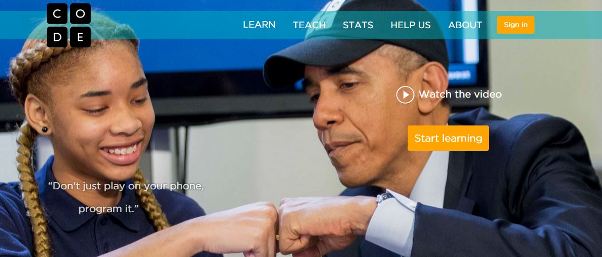
Code.org is uniquely suited to kids because it was actually created to get coding into the mainstream student curriculum. The site provides basic programming lessons and also offers a gamified approach, as it can be linked with gaming applications and other online resources such as Tynker, Scratch and Khan Academy.

If your child is already a programming whiz or prefers a more traditional learning experience, Coursera and Codecademy offer more advanced, structured and formal approaches to learning programming languages.

This post was brought to you in partnership with Tech+. Want to learn more about how technology can improve your lifestyle? Register to attend the Tech+ conference and exhibition.

Tuesday, 21 July 2015

MOOC - Internet Giants: The Law and Economics of Media Platforms

Prof. Randal Picker (Chicago) guest-blogging about his MOOC, ‘Internet Giants: The Law and Economics of Media Platforms’

https://www.washingtonpost.com/news/volokh-conspiracy/wp/2015/07/09/prof-randal-picker-chicago-guest-blogging-about-his-mooc-internet-giants-the-law-and-economics-of-media-platforms/

I’m delighted to report that Professor Randal Picker of the University of Chicago Law School will be blogging in the coming days about his forthcoming free massive open online course (MOOC), “Internet Giants: The Law and Economics of Media Platforms.” This is the University of Chicago Law School’s first course being done using Coursera’s on-demand format, so the content is always available and students have access to all the content all the time.

Professor Picker’s posts will mostly be about how we should think about MOOCs, the experience of preparing a MOOC and the experience of running it. Here, though, is a summary of the substance of the MOOC, as background for his posts:
Internet Giants: The Law and Economics of Media platforms focuses on the law, economics and technology that define the online world that we live in today. This means the world of Microsoft, Google, and Apple, and ideas like network neutrality. There is no single body of law that applies to this world, but we repeatedly see cases and regulations centered on antitrust, copyright, patents, privacy and telecommunications. And the economic underpinnings of these firms — two-sided markets and the like — are quite different from most conventional markets.
All of this makes for a rich mix of law, economics and technology. And all of the issues arise in tools and technologies — from Microsoft Windows to Google search to iOS and Android and then to Netflix and ebooks — that we use every day. We will look at all of that historically and through cases being decided today.
Find Enroll Learnbanner

Featured

Starting a Consulting 

Practice

Starting a Consulting Practice

Find out how you can earn income by sharing your training or knowledge with others.
PMP ® Certification Prep 1

PMP ® Certification Prep 1

Begin a well-paying career as a project manager by preparing to take--and pass--the PMP® certification exam.
How to Get Started in Game Development

How to Get Started in Game Development

Take steps toward a new career in game development by building a foundation to design games in a wide variety of genres for different audiences and platforms.
Accounting Fundamentals

Accounting Fundamentals

Gain a marketable new skill by learning the basics of double-entry bookkeeping, financial reporting, and more.
Conversational Japanese

Conversational Japanese

Whether you want to learn conversational Japanese for travel or just for fun, you'll find this course makes it easy and enjoyable for beginners to master the essentials of the Japanese language.
Introduction to QuickBooks 2015

Introduction to QuickBooks 2015

Learn how to quickly and efficiently gain control over the financial aspects of your business using this powerful software program.

Student Profiles